CE198: Functional Neurological Disorders: Advancing Physical Therapy with Evidence-Based Clinical Reasoning
SHU Giving Day is here!
The SHU community is coming together now through noon Thursday. Be a part of the impact and support what you love most. One Day. One Heart. One Community.

Includes online education, discussion sessions, group mentoring, a community of practice and many more resources and tools to support clinicians and organizations in assessment and treatment of individuals with Functional Neurologic Disorders in clinical practice.
Functional Neurological Disorders (FND) are one of the top five reasons people seek evaluation in neurology clinics. Despite this high prevalence, FND remains poorly understood, presenting significant challenges for physical therapists in various practice settings.
FND is recognized as a brain disorder, characterized by disruptions within and across brain networks. Diagnosis relies on "rule-in" signs with high sensitivity and specificity, distinguishing it from other conditions. Emerging neuroscience has revealed that individuals with FND often experience impairments in several areas, including prediction, attention, interoception and agency.
Physical therapy is a first-line treatment for motor FND, supported by consensus guidelines and emerging evidence from randomized controlled trials. However, inconsistencies in entry-level physical therapy curricula have left many clinicians grappling with clinical questions and a need for effective strategies to manage this complex patient population. This course will equip participants with foundational knowledge and clinical reasoning frameworks to enhance the assessment and management of FND, grounded in current and emerging evidence.
In addition to didactic online learning, participants will receive many resources to support implementation, including:
- FND education, assessment and treatment resources (e.g. cheat sheets)
- Reading resource library
- "FND Essentials" supply list to enhance treatment sessions
- Two mid-course sessions to answer questions about content (2, 1-hour sessions)
- Two online group mentoring sessions (2, 1-hour sessions)
- Participation in an online community of practice for one year which will include quarterly meetings plus access to an online community
About the Institute for Knowledge Translation
Research indicates that traditional methods of providing education, such as in-person and online continuing education courses, may improve knowledge and skill but they do very little to change the care provided in clinical practice. The Institute for Knowledge Translation (IKT) provides an innovative and evidence-based solution to maximize the impact of education and quality improvement efforts. The IKT offers a variety of evidence-based knowledge translation programs, from comprehensive educational packages to help individuals build knowledge to comprehensive solutions to assist health care organizations in improving clinical practice.
Dates & Times
- Online Course: February 2, 2026
- Q&A Sessions: March 3 & 31, 2026 at 7 p.m. ET
- Mentoring Sessions: April 28 & May 5, 2026 at 7 p.m. ET
CEHs
14
Cost
$479
Program Objectives
This course offers a comprehensive approach to understanding and managing FND, equipping participants with the tools to deliver evidence-based, patient-centered care. Participants will:
- Explain the pathophysiology of FND effectively to patients and colleagues.
- Perform accurate assessments, integrating biopsychosocial principles into both subject and objective evaluations.
- Utilize clinical reasoning frameworks to create personalized, effective plans of care for individuals with FND.
- Screen for common comorbidities such as Postural Orthostatic Tachycardia Syndrome (POTS) and Ehlers-Danlos Syndrome (EDS) and understand how to adjust care plans accordingly.
- Identify when and how to refer patients to other allied health professionals for optimal outcomes.
Community of Practice
The IKT Functional Neurologic Disorder Community of Practice meets for 1-hour, quarterly at 7 p.m. ET. The meeting format includes a presentation on research or application of research to clinical practice, followed by a discussion. The registration for this course includes a 1-year membership to the Community of Practice. After the first year, clinicians can renew with a paid membership.
Course Outline
| Dates | Activity |
|---|---|
| February 2 - March 3, 2026 |
Survey & Part 1 of Online Course Participants will take the first component of the online course material which will take approximately 3 hours. Part 1 will include: history of FND, diagnosis of FND, pathophysiology and mechanisms and current treatment evidence. |
| March 3, 2026 at 7 p.m. ET | 1-Hour Q&A Session 1-hour session with the course instructors. Participants will be asked to submit questions prior to the session. |
| March 3-31, 2026 | Part 2 of Online Course Participants will take the second part of the online course which will take approximately 3 hours and include physical therapy evaluation including a framework for evaluation, subjective history and objective assessment of all relevant systems. |
| March 31, 2026 at 7 p.m. ET | 1-Hour Q&A Session 1-hour session with the course instructors. Participants will be asked to submit questions prior to the session. |
| March 31 - April 28, 2026 | Part 3 of Online Course Participants will take the third part of the online course which will take approximately 3.5 hours and include physical therapy treatment including motor control, sensory and autonomic interventions and management of episodic symptoms. Cases provide examples of treatment and discharge planning. |
| April 28 - May 5, 2026 | Part 4 of Online Course Participants will take the fourth part of the course which will take approximately 1 hour to complete and will include a post-test. Topics covered will be addressing future directions in FND including the overlap of FND with autism, EDS, POTS and dual neurologic diagnoses including Parkinson's disease. |
| April 28 & May 5, 2026 at 7 p.m. ET |
2 1-Hour Online Mentoring Sessions Participants will be asked to submit any challenging cases, questions or issues for discussion 1-week prior to mentoring meeting. |
| Quarterly Meetings at 7 p.m. |
Online Community of Practice (CoP) |
Faculty
 Julie Maggio
 Julie Maggio
Julie Maggio is a clinical specialist for the outpatient physical therapy service at Massachusetts General Hospital as well as an affiliated researcher with the MGH Functional Neurology Research Group. She works exclusively with patients who have neurologic dysfunction and has extensive experience treating patients with Functional Neurologic Disorders. Her research is focused on outpatient care of patients with FND and she actively lectures on physical therapy treatment for FND. Julie is a founding member of the FND society and is recognized as a Certified Neurologic Clinical Specialist by the American Board of Physical Therapy Specialties.
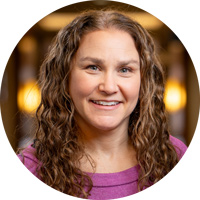 Heather Salon
 Heather Salon
Heather Salon is a clinical specialist in the outpatient physical therapy service at Massachusetts General Hospital. She is a mentor and faculty member of the MGH Neurologic Physical Therapy Residency program and provides clinical care to patients with neurological and vestibular disorders including close collaboration with the FND clinic at MGH. She also provides coverage of specialty multidisciplinary care clinic for Huntington's Disease. Currently, she is pursuing a Doctor of Education degree at Northeastern University with proposed research in the development of mentors in physical therapy residency programs. She is an adjunct faculty member at Northeastern University and the MGH Institute for Health Professions. She lecture in her faculty role, as well as being invited speaker on various topics, including Functional Neurological Disorders. She is recognized as a Neurologic Clinical Specialist by the American Board of Physical Therapy Specialties.